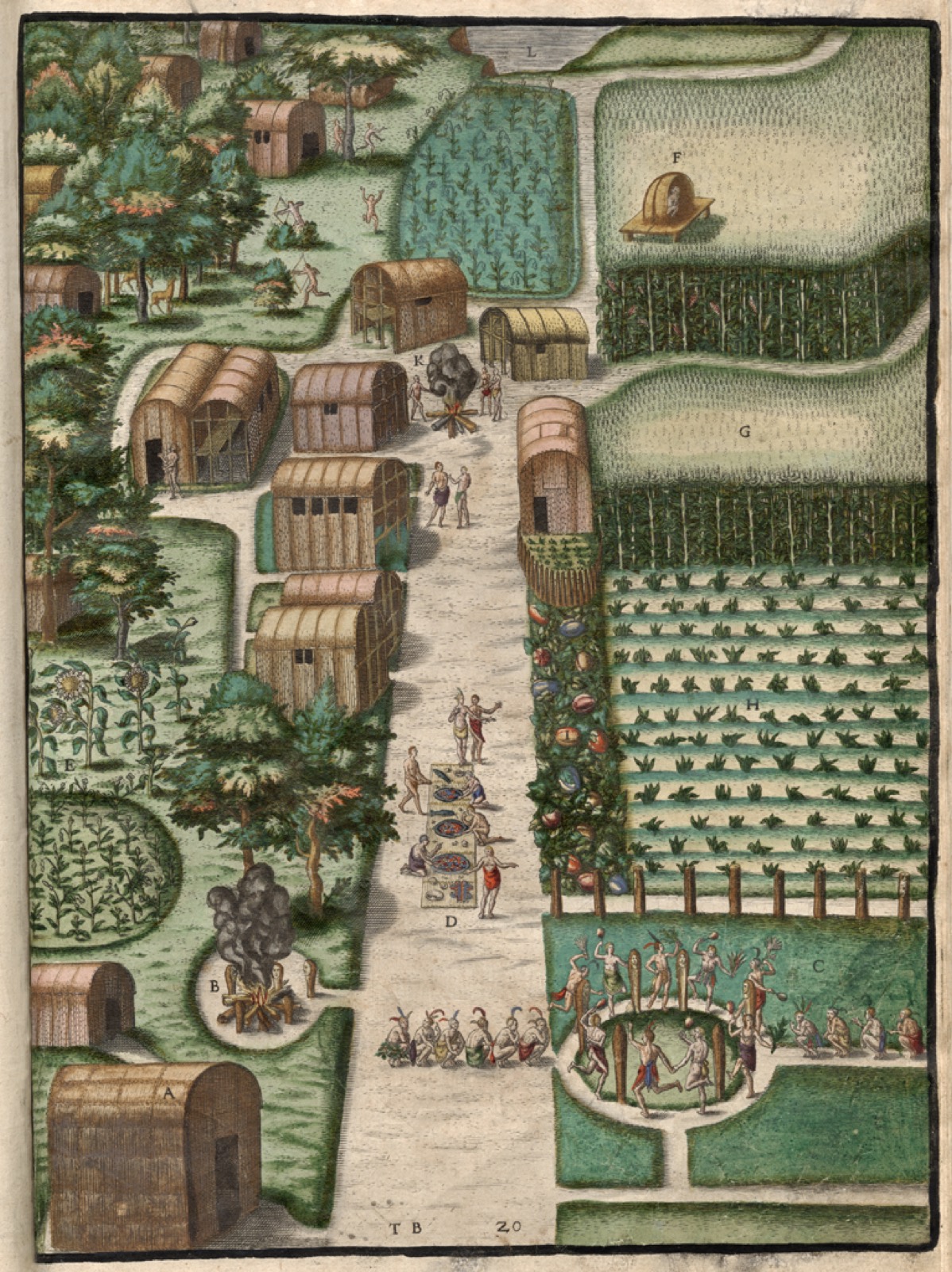
Theodor de Bry’s 1590 engraving of Secoton, from John White’s watercolors. Public domain.
Wartime price ceilings and ration books limited what a household could buy, so money alone no longer decided who got sugar, meat, gasoline, or shoes.
A stretched household was protected from a bidding war it would have lost, and it still had to stretch coupons that do not grow because a child is hungry.
A household with savings from a defense wage could not freely spend them on rationed goods, which was frustrating and was the point.
A shopkeeper lived inside a legal ceiling and a short supply, and goods that moved outside that system were a black market a household was not supposed to need.
The Emergency Price Control Act of 1942 was the legal basis for ceilings run by the Office of Price Administration, and rationing spread across more of the grocery cart and the garage as the war went on.
The aim was to send production to the military without letting civilian demand set off a price explosion.
A family planned the week from a coupon book as well as from a wallet, and the two did not always match.
Emergency Price Control Act of 1942; Meg Jacobs, Pocketbook Politics (2005)