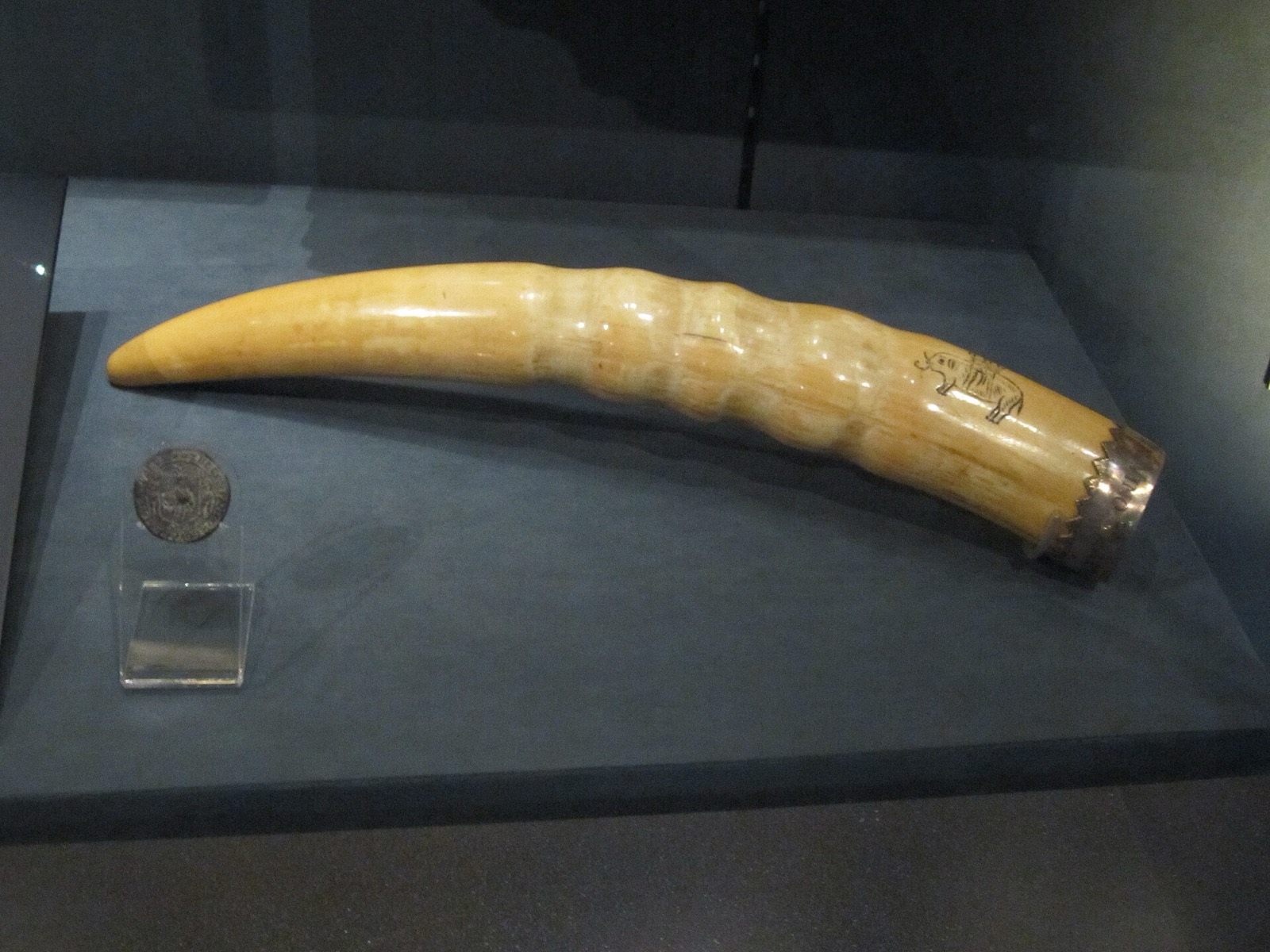
Ivory marked by the Royal African Company. International Slavery Museum, Liverpool. Wikimedia Commons.
The Current Tax Payment Act of 1943 put the income tax on a pay-as-you-go basis, so employers withheld it from wages instead of leaving a lump sum for the next year.
A stretched household whose pay now reached the wartime income tax felt the deduction every payday, in a tax that had barely touched ordinary wages a decade earlier.
A household with a regular salary stopped saving up for a frightening spring bill and started living on a paycheck that was smaller before it reached the table.
An employer became the collector on the payroll, and a household that lived on business profits rather than a wage still had to plan its own payments.
The war had widened the income tax from a tax on higher incomes into a tax on ordinary wages.
Paying last year and this year at the same time would have crushed family budgets, so the 1943 law withheld for the current year and cancelled a large part of the prior year’s bill.
The household met the tax as money it never held, taken before the envelope came home.
Current Tax Payment Act of 1943