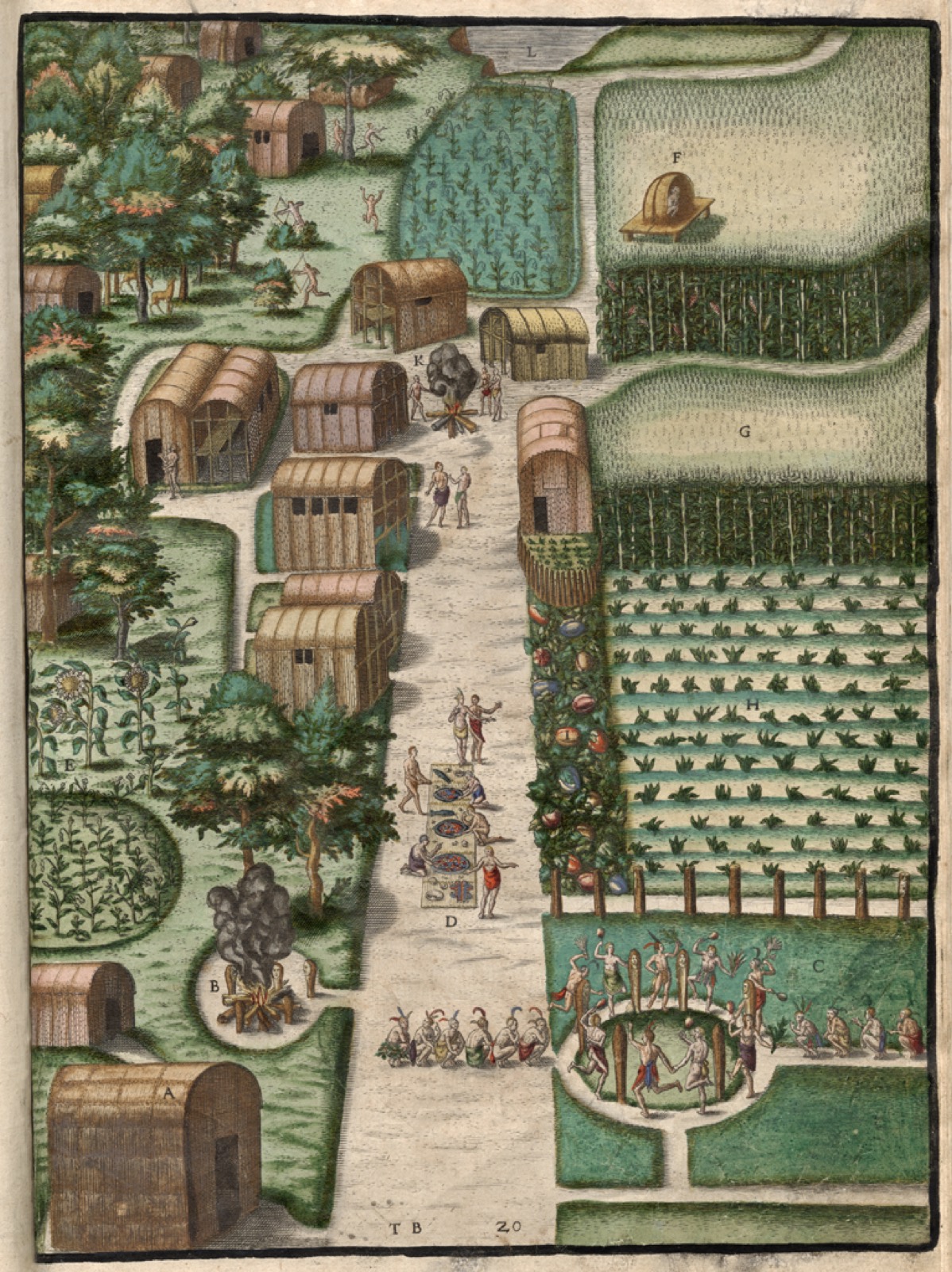
Theodor de Bry’s 1590 engraving of Secoton, from John White’s watercolors. Public domain.
The Servicemen’s Readjustment Act of 1944 offered veterans tuition, a stretch of unemployment pay while they looked for work, and a government-backed home loan.
A stretched veteran household could use the unemployment pay to avoid the first bad job, and could still be shut out of a college or a mortgage by a local office, a segregated school, or a bank that would not lend on its street.
A veteran household that a school would take and a lender would accept received tuition and a path to a house that prewar wages had not offered.
A college, a lender, and a builder gained a stream of publicly backed customers, and local offices decided a great many cases with very little national watching.
The statute did not print a racial exclusion.
In practice, especially in the South, Black veterans were often kept from the schools and the mortgages white veterans used, because Jim Crow campuses, local officials, and redlined lending stood between the law and the household.
The act also paid twenty dollars a week for up to fifty-two weeks while a veteran looked for work.
Servicemen's Readjustment Act, 58 Stat. 284 (1944); Ira Katznelson, When Affirmative Action Was White (2005)