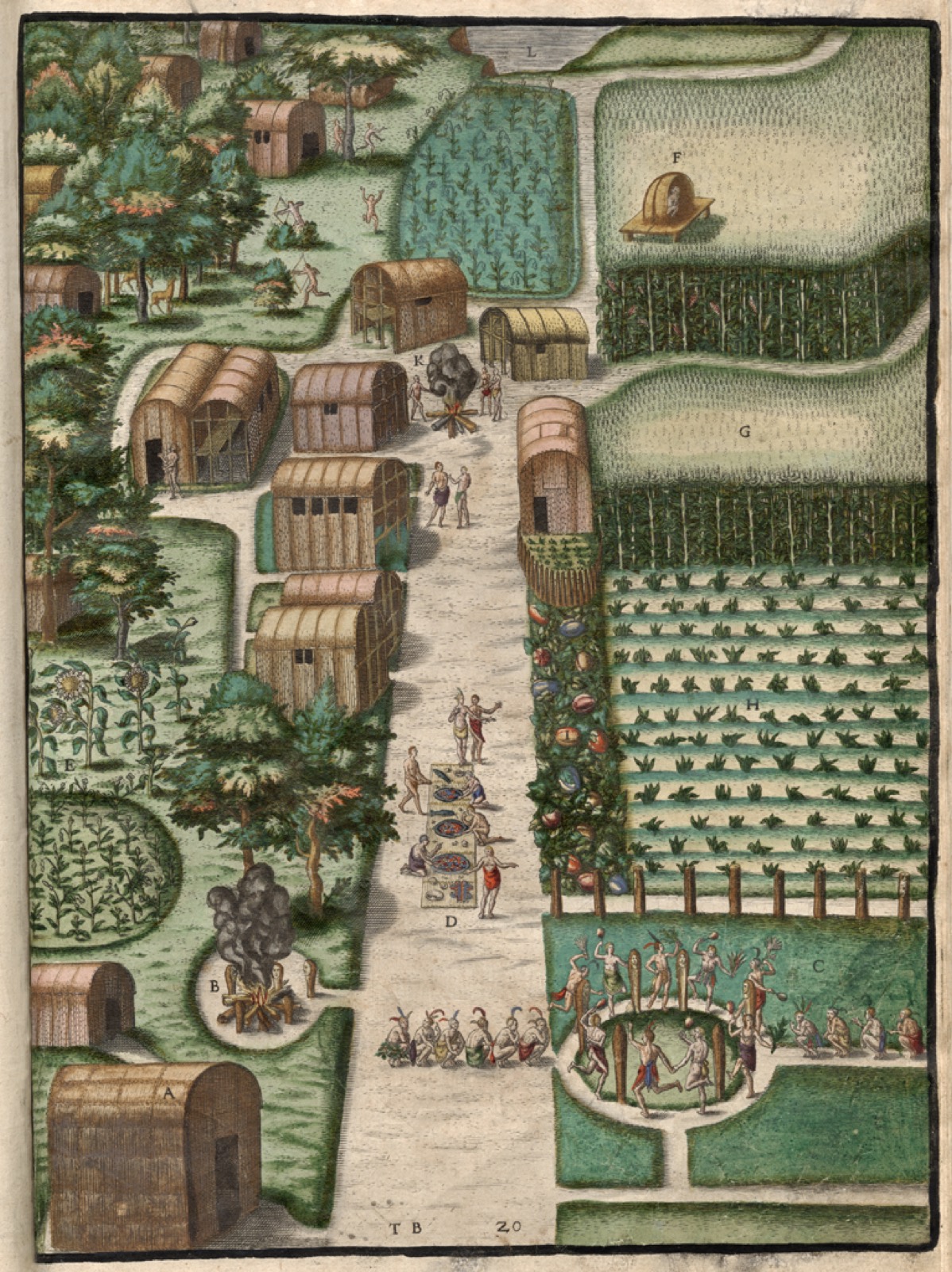
Theodor de Bry’s 1590 engraving of Secoton, from John White’s watercolors. Public domain.
On Long Island in 1947, Levitt and Sons began selling mass-built houses on long mortgages a wage could carry, and the early deeds kept Black buyers out.
A stretched household that could not qualify for the loan, or that the deed excluded, stayed a renter and watched the new streets fill.
A white household with a steady job, and a veteran who could use a guaranteed loan, could buy a new house for a monthly payment close to rent.
The builder ran a production line of houses and of buyers, and the lender made a loan that federal housing programs would stand behind.
Levittown worked because the Federal Housing Administration and the veterans’ loan guarantee had already made the long, low-down-payment mortgage normal for approved borrowers.
The houses were standardized so they could be built fast and priced for that payment.
Racial bars in the deeds, and lender practice behind them, meant the suburb that came to stand for the postwar house was not offered to every household that could have paid.
Jackson, Crabgrass Frontier (1985)