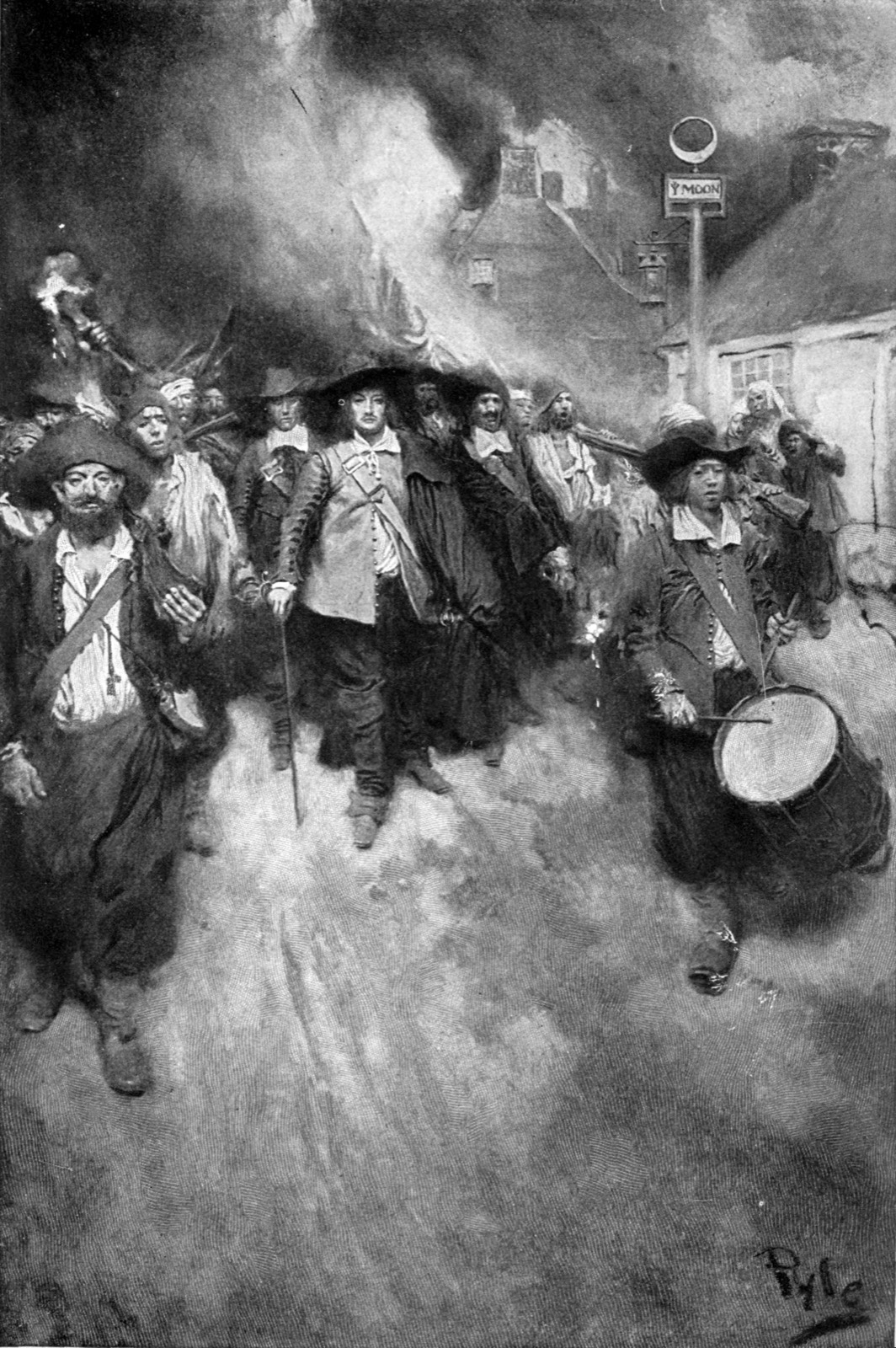
Howard Pyle, The Burning of Jamestown, an early-twentieth-century illustration, not an eyewitness view. Public domain.
When the Korean War began in 1950, households that remembered rationing rushed to buy, and prices rose before controls came back.
A stretched household that could not stock a pantry paid the higher grocery price on the ordinary weekly shop.
A household with savings and a car could buy early and then live with a higher price level on everything it had not stored.
A merchant with goods bought at the old price sold into the scare at the new one, a gain the shopper felt as gouging.
The Defense Production Act of 1950 let the government steer production and, as the war went on, put controls back on wages and prices.
The first effect in the kitchen was faster than any statute.
People who had lived through coupons tried not to be caught empty-handed, and the families least able to buy ahead paid the higher prices in real time.
Defense Production Act of 1950