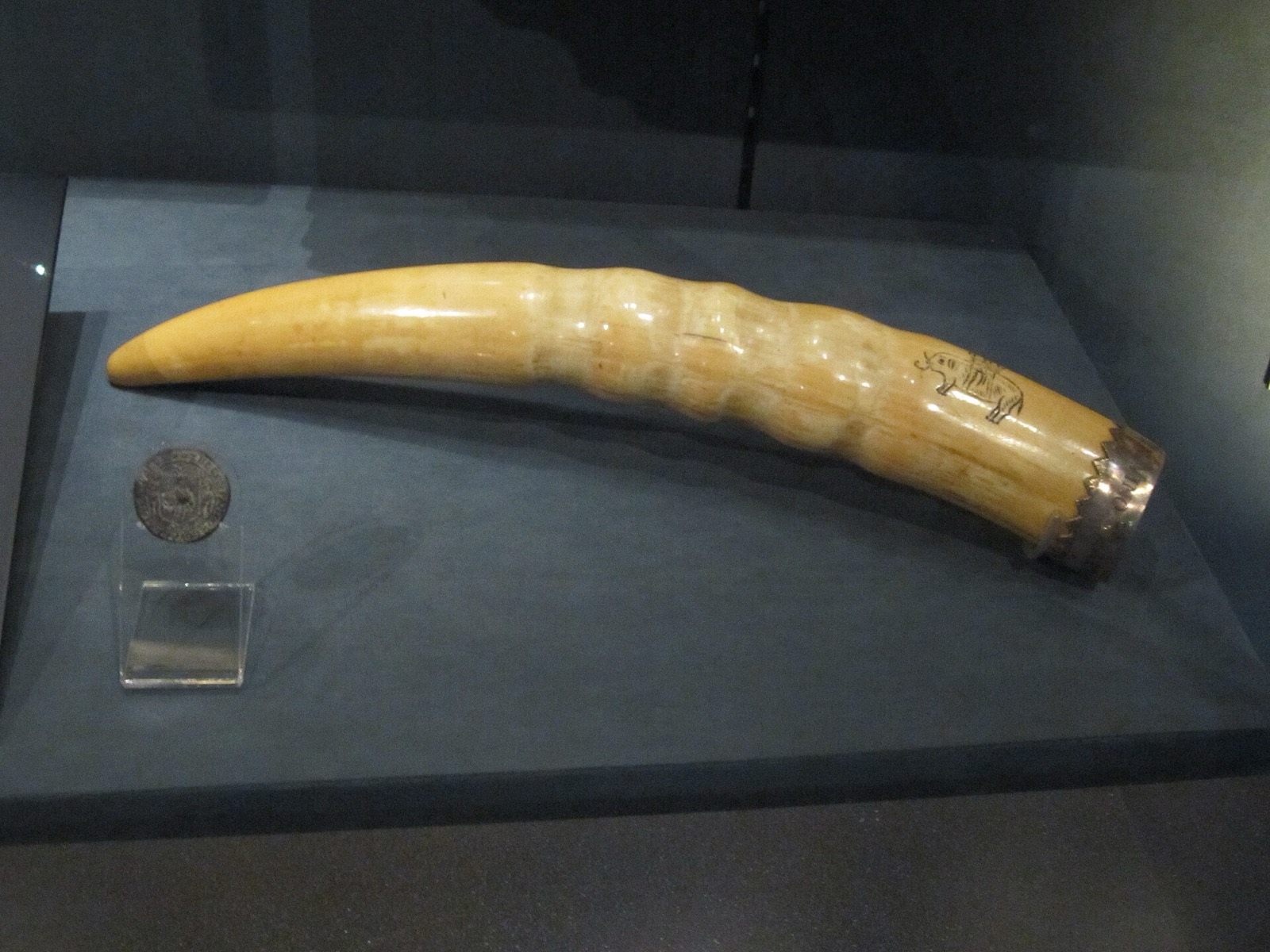
Ivory marked by the Royal African Company. International Slavery Museum, Liverpool. Wikimedia Commons.
In March 1951 the Treasury and the Federal Reserve agreed that the central bank would stop pegging the price of government bonds, so interest rates could rise against inflation.
A stretched household that held no bonds felt the change, if at all, as the cost of credit and the path of prices.
A household with war bonds or a savings account was now in a world where the rate on safe savings could move, and where selling an old bond early could bring a lower price if rates rose.
A bank or an insurer that had held government bonds under the wartime peg could no longer treat those bonds as an asset with a protected price, and a new borrower could meet a higher rate.
From the Second World War on, the Federal Reserve had kept Treasury bond prices up so the government could borrow cheaply, which also fed money into the economy.
The Korean War made that support look like a machine for rising prices.
The Accord let the Federal Reserve restrict credit even when that made the government’s own borrowing more expensive.
Friedman and Schwartz, A Monetary History of the United States (1963)