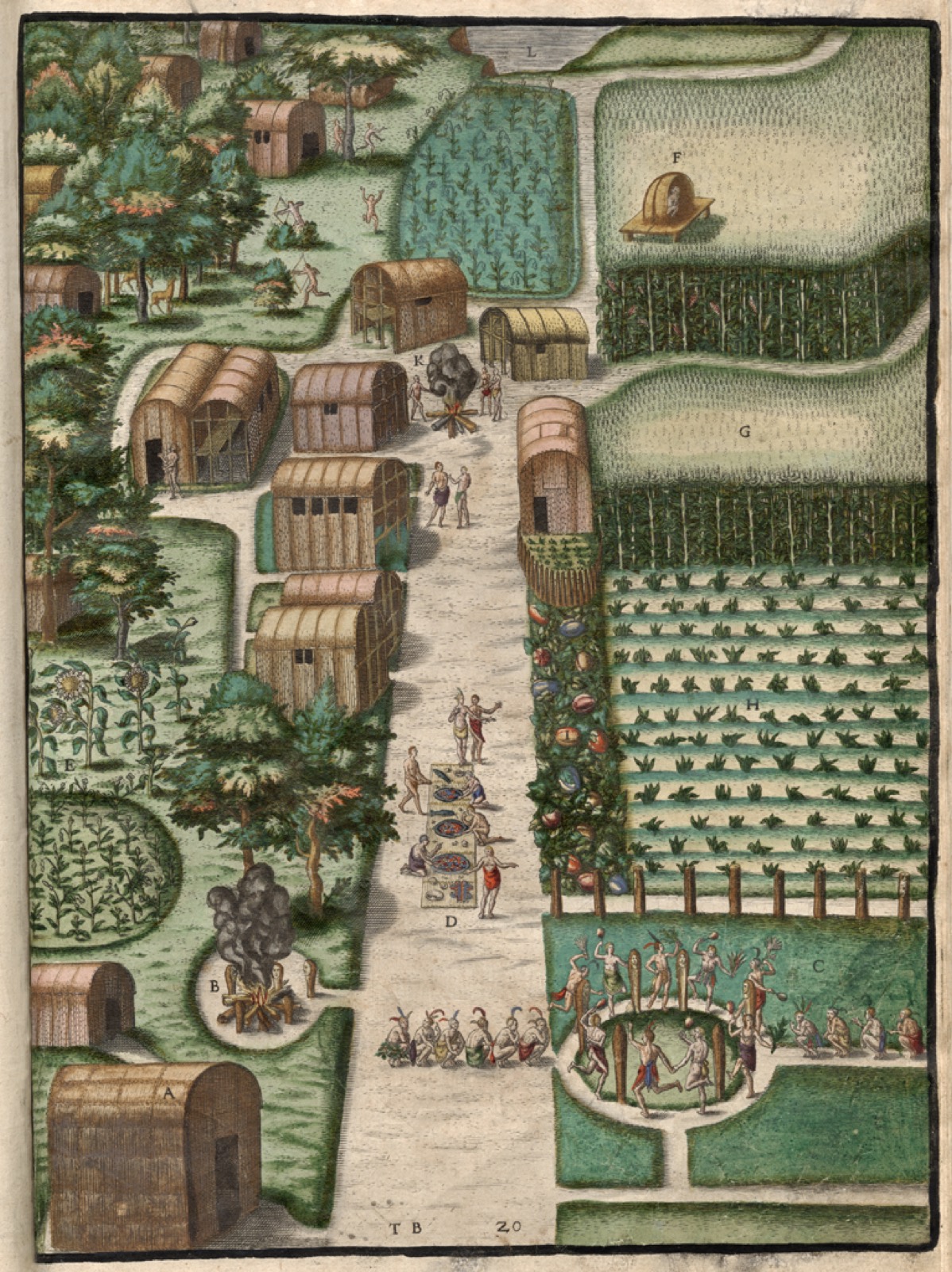
Theodor de Bry’s 1590 engraving of Secoton, from John White’s watercolors. Public domain.
The recession of 1953 and 1954 idled workers, and unemployment insurance, which had not existed in 1930, replaced part of the wage for covered people for a limited number of weeks.
A stretched household in a covered job received a check smaller than the wage, and the check stopped when the weeks ran out.
A household that stayed employed through a mild downturn mostly noticed shorter hours or a postponed raise, not a collapse.
A firm cut inventory and overtime first, and a firm whose workers were covered paid into a system that carried part of the payroll during the layoff.
State unemployment programs, built under the Social Security Act, were old enough by the mid-1950s that a factory town expected them to work.
They did not cover every job, they did not replace the whole paycheck, and they did not last until the next job if the next job was slow.
A covered household was less alone than in 1930, and an uncovered one was not.
Social Security Act, 49 Stat. 620 (1935)