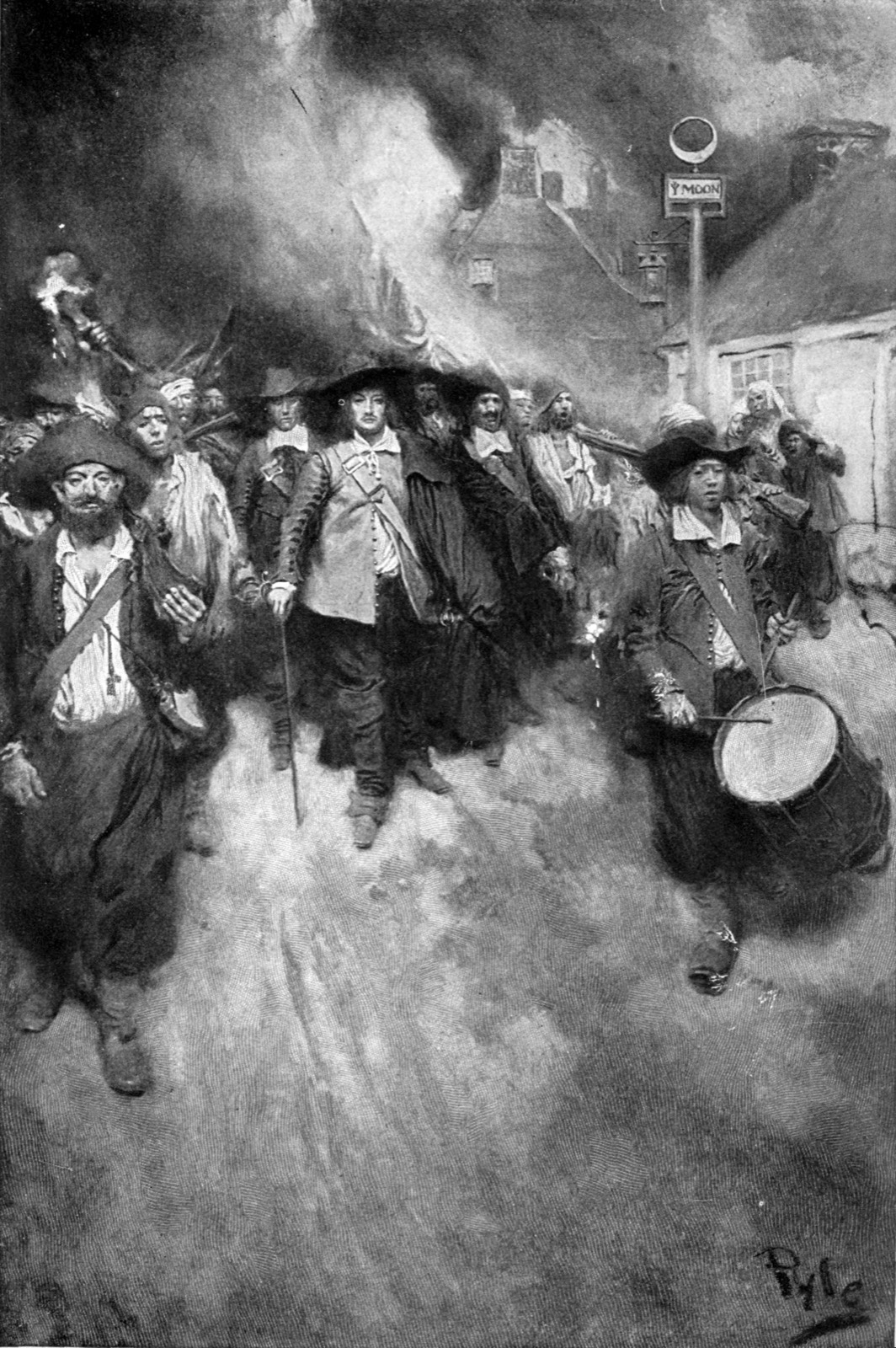
Howard Pyle, The Burning of Jamestown, an early-twentieth-century illustration, not an eyewitness view. Public domain.
In 1959 the steelworkers struck the major producers from summer into autumn, and households that lived on the mill wage went months without it.
A stretched steel household drew a smaller union strike benefit if it qualified, and still had to cover rent and food the benefit did not cover.
A household in the same town that did not work at the mill felt quieter stores and shorter hours in the shops that lived off steel pay.
The companies had built inventory before the walkout, and they got a court order under the Taft-Hartley Act sending people back while bargaining went on.
The fight was over wages, work rules, and who set the pace of the job.
It ran long enough to drain family savings and to bring the emergency strike powers of the 1947 labor law into a peacetime industry.
A court order is not a contract, so the households went back without the argument being finished.
Labor Management Relations Act, 61 Stat. 136 (1947)