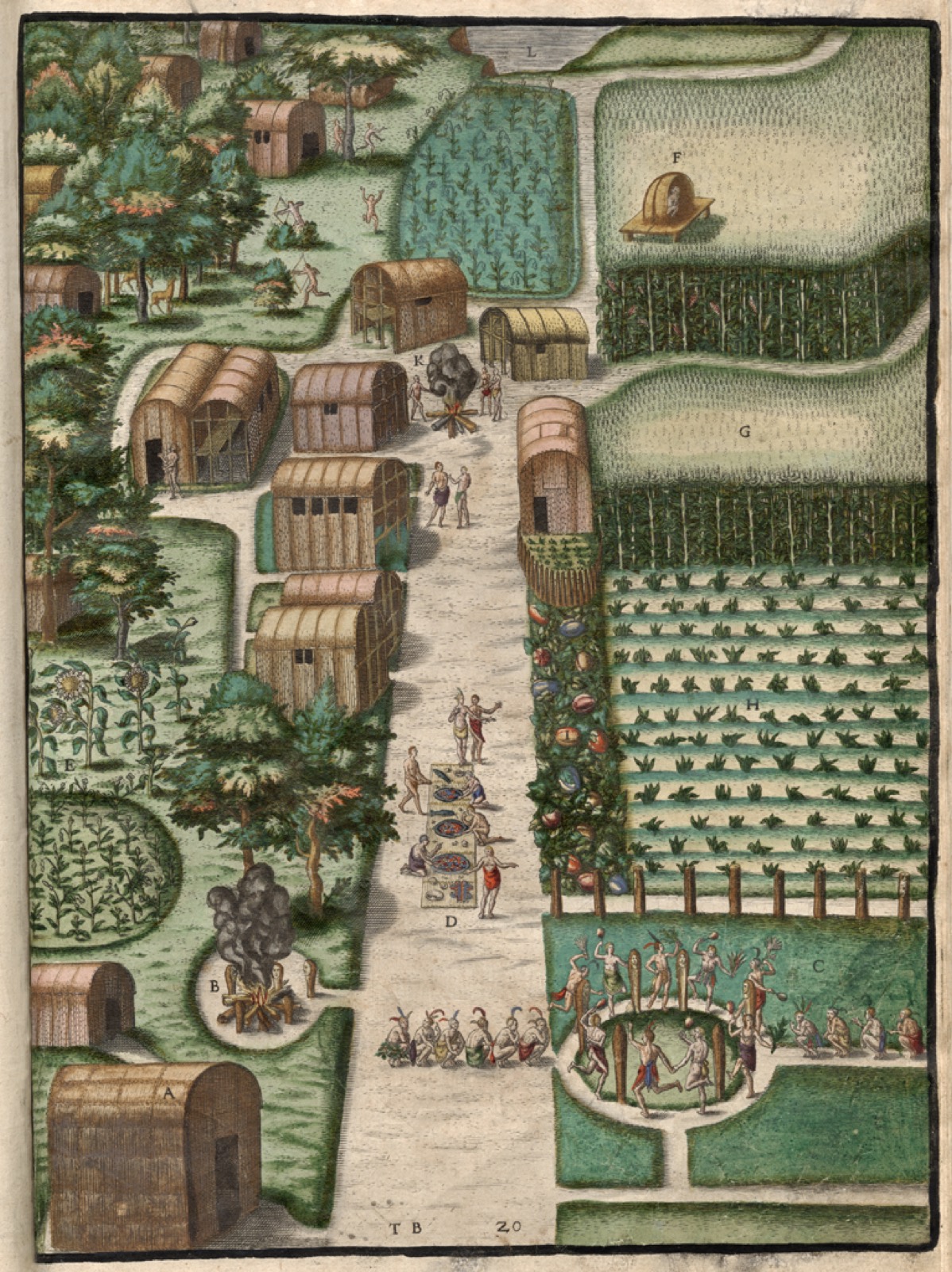
Theodor de Bry’s 1590 engraving of Secoton, from John White’s watercolors. Public domain.
The 1960 amendments to Social Security offered federal matching money so states could help older people who were not on the poorest relief and still could not pay a hospital bill, and many states did little.
A stretched older household in a state that refused or skimped met the hospital bill with the same thin tools as before.
An older household with some savings could spend them down in one illness and still miss a means test drawn too tightly to catch it in time.
A state had to pass its own program to get the federal match, and a hospital that treated an uninsured older patient might still go unpaid if the state had not.
The medical provisions were known as Kerr-Mills, after their sponsors.
The program was optional, it varied sharply by state, and it reached only a portion of the older people at risk of a ruinous bill.
That patchwork is what made national hospital insurance for the aged a household question, not only a Washington argument, in the years just before Medicare.
Social Security Amendments of 1960