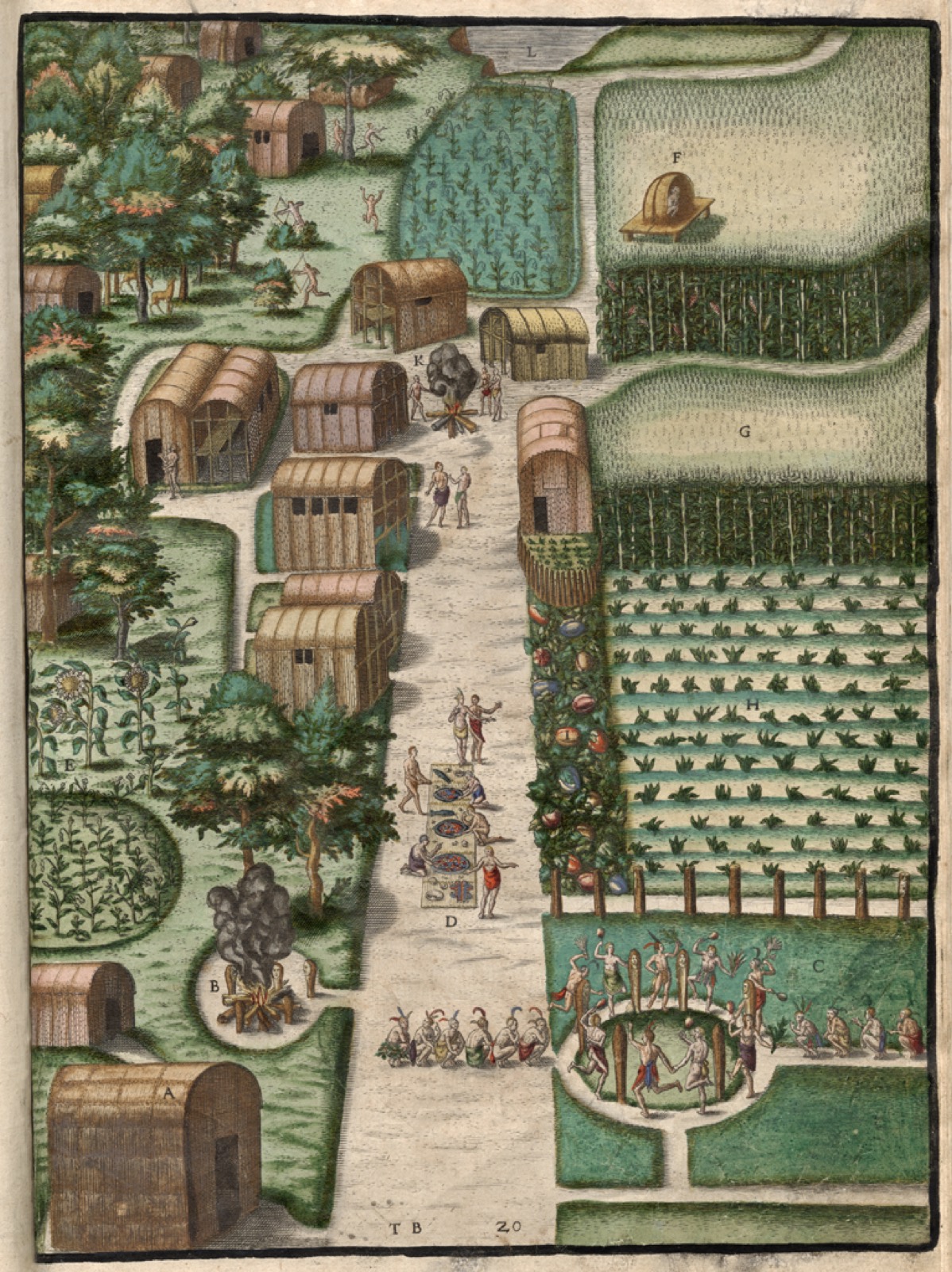
Theodor de Bry’s 1590 engraving of Secoton, from John White’s watercolors. Public domain.
The 1965 Social Security amendments created Medicare for older people and Medicaid for certain people with low incomes, and they moved a serious medical bill off the savings account.
A stretched working household paid a new payroll tax for hospital insurance it would not use until old age, and a poor household received Medicaid only if it fit the welfare categories its state actually covered.
An older household with savings and a steady work history gained hospital coverage financed by that payroll tax, and could add insurance for doctors’ bills by paying a premium, so a hospital stay no longer had to empty the savings first.
A hospital or a doctor gained a public payer that paid more reliably than a broke family, and a business that already insured its working-age employees was not relieved of that plan by a law aimed at the aged and the poor.
Hospital insurance under Medicare was financed by a tax on wages and covered the eligible aged, while coverage of doctors’ bills was voluntary and partly paid by a monthly premium.
Medicaid matched federal funds to state programs for people in the categories of public assistance, so two poor households in two states could get two different answers, and many low-income adults fit none of the categories.
The statute was signed in the summer of 1965, and the hospital benefits and the payroll tax that funded them began in the summer of 1966.
Social Security Amendments of 1965