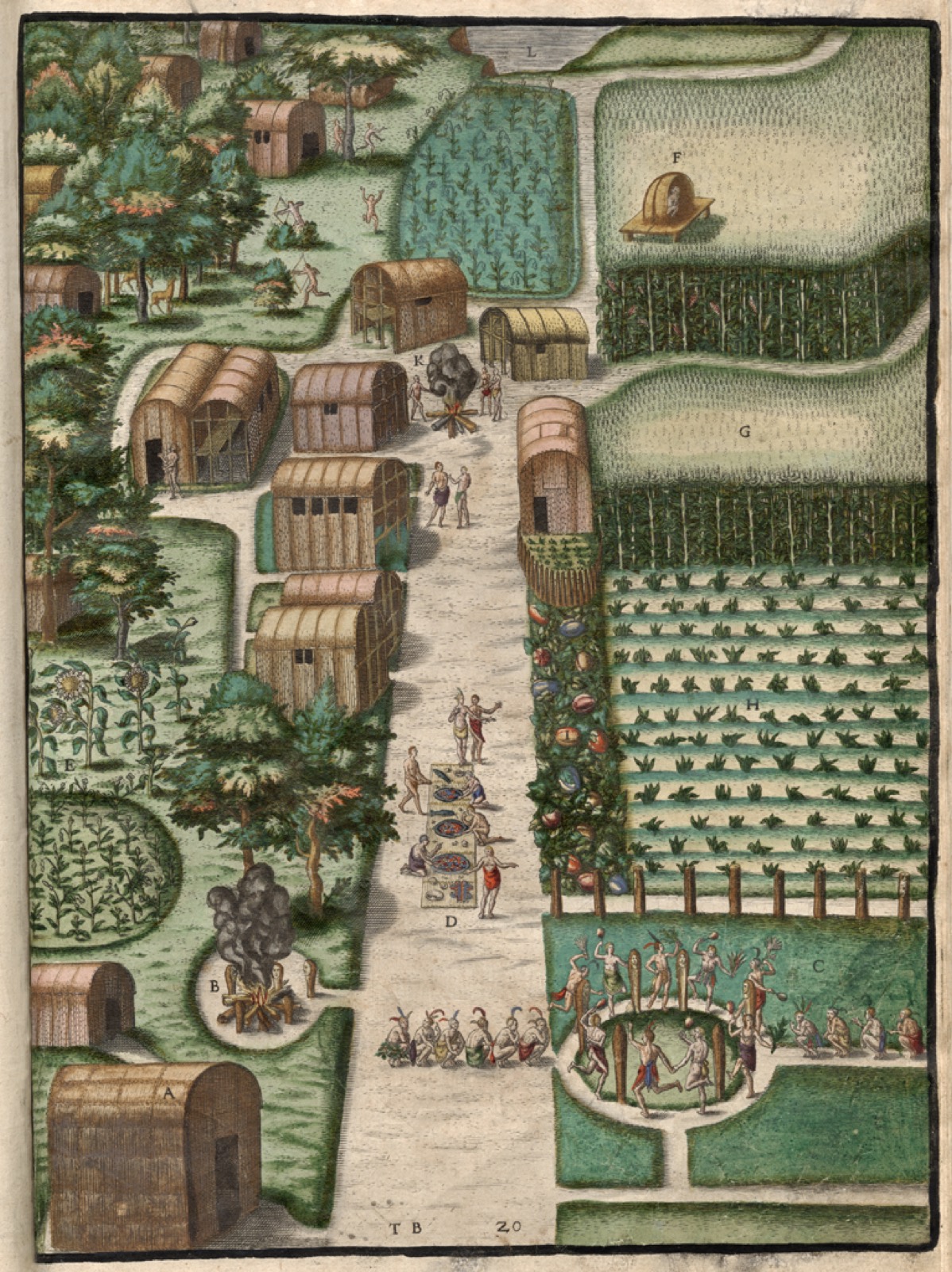
Theodor de Bry’s 1590 engraving of Secoton, from John White’s watercolors. Public domain.
In the mid-2000s a house became a way to borrow, and Wall Street turned the mortgages into bonds.
If money is tight, a lender may offer you a loan your income cannot carry once the rate resets.
If you are in the middle, cash pulled out of a rising house feels like savings and is debt.
If you have savings, the bonds built from other people's mortgages are now inside ordinary funds.
Lenders made more loans to borrowers with weak credit, often at rates that would rise later.
Those mortgages were bundled and sold, so the person who made the loan did not have to keep it.
Owners borrowed against the price of the house, and the price was doing the work that wages were not.
Source: Financial Crisis Inquiry Commission, on subprime lending, securitization, and house-equity withdrawal.