Virginia Company investors bet £6,000 on a colony that nearly starved to death. The share price held. The people inside the fort did not.
Virginia Company investors bet £6,000 on a colony that nearly starved to death. The share price held. The people inside the fort did not.
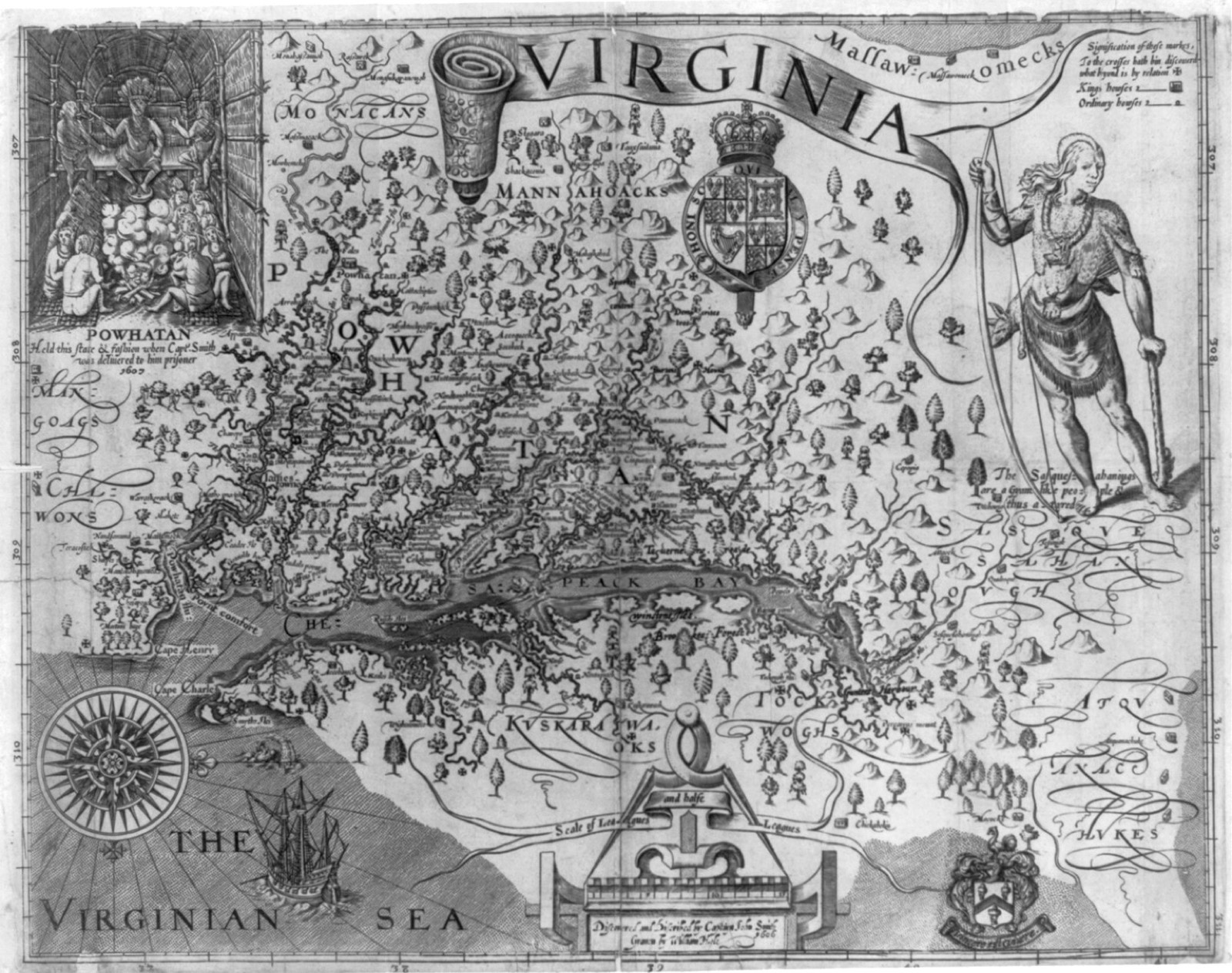
On the morning of May 14, 1607, 104 men came ashore at a swampy peninsula on the James River in Virginia and began building the fort that would become Jamestown. They were not explorers. They were employees.
Their employer was the Virginia Company of London — a joint-stock corporation chartered by King James I with a mandate to establish an English presence in North America and return a profit to its investors. The investors had subscribed £6,000 in the initial capitalization. They expected gold, silver, and a route to the Pacific. They received a swamp, a famine, and a 60 percent mortality rate within the first two years.
The share price held.
This is not a story about starvation. It is a story about information — who controlled it, who was allowed to know what was actually happening, and what the men on Philpot Lane in London decided to do when the dispatches from Virginia arrived describing conditions that no investor broadsheet had anticipated.
Sir Thomas Smythe had a problem that had nothing to do with Virginia. His problem was London. Specifically, the 659 individual investors and 56 trade guilds who had purchased shares in the Virginia Company — merchants, guilds, bishops, aristocrats — all of whom expected a return on their capital and none of whom had any idea what was actually happening three thousand miles away.
What was actually happening: the colony was dying. Disease. Chaos. No gold. No passage to Asia. No profitable export. Reports filtering back from Virginia painted a picture no shareholder wanted to see. If those reports became public, the stock would collapse. If the stock collapsed, the fundraising would stop. If the fundraising stopped, Jamestown would die — and so would Smythe's position as Britain's most powerful venture capitalist.
So in May 1609, Smythe executed a restructuring that would be recognized immediately in any modern boardroom. A new royal charter. A new share offering. A new story. For £12 and 10 shillings — six months of wages for an ordinary laborer — investors could purchase a stake in the future of America. The pitch was immaculate. The prospectus glowed. The broadsheets sang. £10,000 raised in weeks.
The stock offering succeeded brilliantly.
Three hundred new colonists boarded ships for Virginia. None of them knew what they were sailing into.
The share certificate said: fertile land, limitless opportunity, guaranteed returns.
The ground said something else entirely.
£12 and 10 shillings per share. Six months of an ordinary laborer's wages. Backed by the promise of 100 acres of American land and dividends that would arrive — the prospectus assured — imminently.
What arrived instead was this:
Of the 500 colonists who entered the winter of 1609 — fed on eight ounces of moldy flour per day, rationed by a company that had already spent its emergency reserves on broadsheet advertisements — only 60 came out.
That is an 88 percent mortality rate.
The Virginia Company never published that number. The share price held.
"There remained not any more than sixty persons, and those so lean and ghastly... fed upon roots, herbs, acorns, walnuts, berries, and now and then a little fish."
— George Percy, Jamestown President. Internal report written May 1610. Never published by the Virginia Company.
What Smythe did next is the part that matters most.
He implemented an information blackout. Letters written home by colonists that painted an honest picture of conditions were seized before they could leave Virginia. Colonists who spoke publicly about the reality of the settlement faced arrest. When the rescue fleet arrived in 1610, the colonial administration formalized this control into the Laws Divine, Moral and Martial — codifying the death penalty for criticizing corporate policy or trying to escape.
Archaeological excavations inside Jamestown Fort have since confirmed what the dispatches Smythe buried were saying. Forensic analysis of a 14-year-old girl's skull — found in the fort's refuse — shows the deliberate marks of cannibalism. Her name appears nowhere in the Virginia Company's records. She was not a person in the ledger. She was a unit of human capital that had ceased to generate value.
Back in London, the broadsheets kept printing. The share price held.
Three groups paid for what happened inside that fort. None of them were at Philpot Lane.
The colonists paid first. Recruited under false pretenses, shipped as human cargo, told they were pioneers when they were actually inventory. Of the 500 alive in October 1609, only 60 walked out of the fort gates in May 1610. The rest died to preserve the valuation of a share certificate held by a man who had never left London.
The Powhatan paid second. They had fed the colony when it arrived. Traded with it. Tolerated it. Corporate desperation ended all of that. When the food ran out inside the fort, colonial officers launched armed raids on native villages — not warfare, procurement. The Powhatan Confederacy had not made an enemy. It had been made one. The multi-decade conflict that followed consumed their territory, their people, and eventually their existence.
The investors paid last — and the least. 659 individuals. 56 trade guilds. Life savings subscribed into the 1609 offering on the strength of a broadsheet. By 1624, every share was worth zero. Their promised land was an ocean away and soaked in blood. They lost money. The colonists lost everything else.
There is a hierarchy to loss. The Virginia Company created it deliberately.
1607 → Virginia Company raises £6,000 in initial capital on the strength of a prospectus that describes a thriving colonial opportunity that does not exist.
1609 → Company raises £10,000 in fresh capital while implementing information blackout on colonial mortality. The template for corporate concealment is set.
1610 → 88% mortality forces martial law. Death penalty imposed for criticizing corporate policy. The first American labor suppression law is written.
1616 → Unable to deliver land dividends, company forces survivors into tobacco monoculture. The commodity machine begins.
1619 → Headright System introduced. Private property codified in colonial America. American real estate law born from corporate desperation.
1624 → Virginia Company bankrupt. Charter revoked. Virginia nationalized. Every private investor dollar gone.
2026 → SEC quarterly disclosure mandates, criminal penalties for material omission, and fiduciary duty law are the direct legal scar tissue of what happened at Philpot Lane in 1609.
Adam Smith published The Wealth of Nations in 1776 — 169 years after Jamestown, and in the same year that the Virginia Company's most consequential legacy, the United States of America, declared independence. Smith's argument that self-interest, properly channeled through free markets, produces collective benefit, was directly contradicted by the Virginia Company's operation: self-interest, operating through a corporation with information advantages over its investors and absolute power over its workers, produced collective catastrophe. Smith's invisible hand works when participants have roughly equal information. Jamestown was designed to prevent that condition. The SEC's disclosure requirements are the regulatory response to this design failure — not an invention of the modern regulatory state, but the direct legal consequence of what Sir Thomas Smythe chose to do in 1609.
They Are Not Modern Inventions.
On some mornings in 1610, men woke up and searched for things that were technically edible. Not food. Edible. There is a difference. Three thousand miles away, a man in a warm office decided not to tell anyone.
The SEC's disclosure requirements. The criminal penalties for hiding material operational failures. The concept of fiduciary duty — the legal obligation of executives to tell investors the truth. We treat these as modern inventions, designed for a world of algorithms and quarterly earnings calls.
They are not. They are the direct legal consequence of what Sir Thomas Smythe decided to do with those dispatches from Virginia. They are what a civilization builds after it discovers that executives will hide the bodies to protect the stock price — and that without law, they will do it every single time.
The 14-year-old girl in the fort had no name in the ledger. She was inventory. That is where American corporate law begins.
Sources · Bhu Srinivasan, Americana (2017); Virginia Company Records, Library of Congress; William Kelso, Jamestown: The Buried Truth (2006); George Percy, A True Relation (1610).