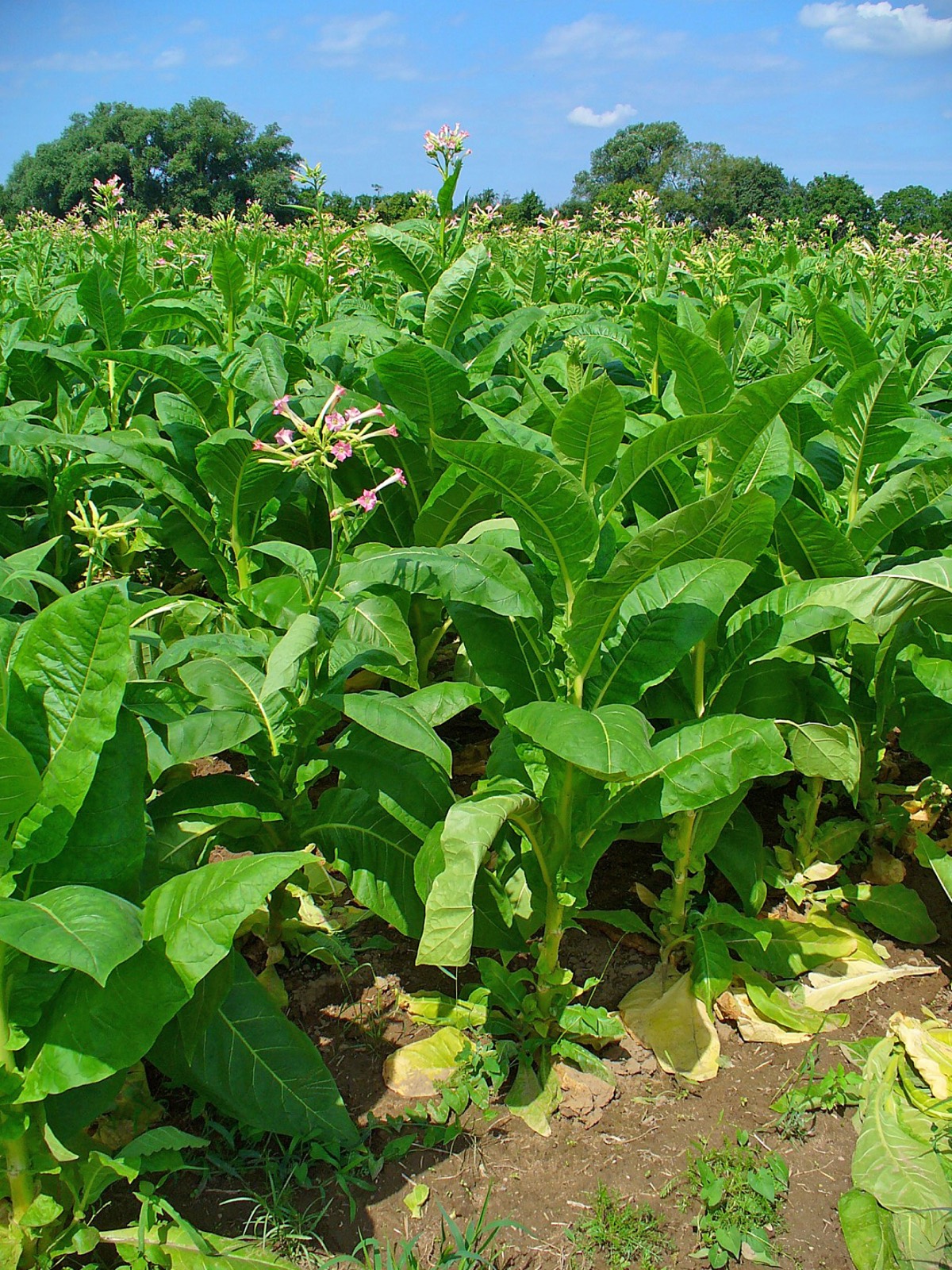
Nicotiana tabacum. Public domain. One crop, planted because it was the only crop London paid for.
Tobacco gave Jamestown a price. Then the price pushed food, safety, and the company itself off the land.
Tobacco gave Jamestown a price. Then the price pushed food, safety, and the company itself off the land.
A monoculture is a place that bets the year on a single crop. Virginia did it on purpose. After John Rolfe showed that a West Indian tobacco would sell in London, the colony stopped looking for a second product. By the late 1610s, visitors wrote that tobacco was growing in the streets of Jamestown. Corn was not.
The logic was simple, which is why it was dangerous. Tobacco had a price in England. Grain had a price only if someone local was hungry enough to pay it, and hungry people are a bad market. A planter who put an acre into tobacco could settle a debt. A planter who put that acre into food could eat, and still owe the debt. The debt won.
The Virginia Company had promised profits. What it had, after a decade, was land it did not farm and investors it could not repay in cash. From 1616 it offered dividends in acres. In 1618 the headright took shape: about fifty acres for each person whose passage you paid. The rule was meant to fill the colony. It also meant that the way to get rich was to import people and put them on new tobacco ground.
In July 1619 the first General Assembly met at Jamestown. The same year, the first Africans recorded in Virginia were sold at Point Comfort. Political rights for some white men, and the sale of Black captives, arrived in the same season. They were not the same event. They were the same economy looking for labor and for a government that would protect the crop.
On March 22, 1622, a Powhatan attack killed about a third of the English in Virginia, including people in settlements that had pushed far up the rivers onto new tobacco land. The colony had scattered itself because tobacco exhausted a field and because new land was how headrights became wealth. A compact town might have been easier to feed and easier to defend. A tobacco colony cannot stay compact. The plant wants fresh ground.
The company did not survive the politics that followed. An investigation in London, led by people who wanted the charter for themselves as much as they wanted reform, ended with the Crown taking Virginia over in 1624. The Virginia Company was finished. Tobacco was not. The royal colony kept the crop, the headright, and the labor system. The firm died. The monoculture became the government.
Sources · Virginia Company records, especially the headright and the 1619 assembly; the 1622 attack as reported to London and discussed in Kingsbury’s Records; the dissolution of the company in 1624. Charles E. Hatch and Edmund S. Morgan remain the clearest modern accounts of how the crop organized the colony.