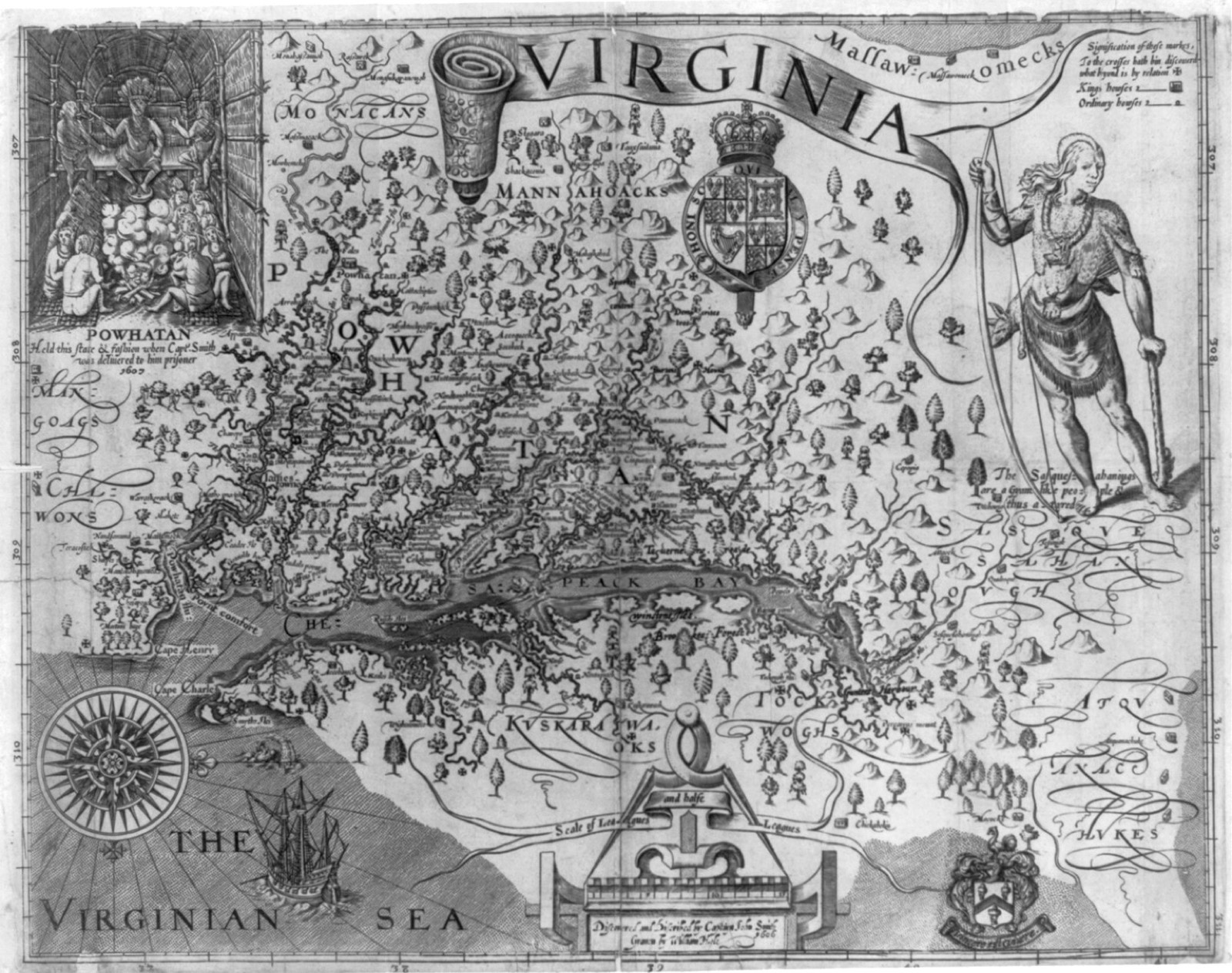
Virginia, engraved by William Hole from John Smith, published 1612. A map of the colony a century before the 1705 code. Public domain, Library of Congress.
The Virginia slave code of 1705 did not invent slavery. It gathered decades of harsher rules and made them one system.
The Virginia slave code of 1705 did not invent slavery. It gathered decades of harsher rules and made them one system.
By 1705, slavery in Virginia was already old. The assembly had been writing pieces of it since the 1660s. In 1662 it declared that a child followed the status of the mother, which meant an enslaved woman’s child was property at birth. In 1667 it said baptism did not free anyone. Other acts limited movement, weapons, and the ability of Black Virginians to testify against white ones. The 1705 statute, usually cited as the act concerning servants and slaves, pulled this into a code. It is the moment the colony stopped pretending the pieces were temporary.
Custom is what the powerful already do. A code is the powerful making it illegal to do otherwise. The 1705 act defined who was a slave, separated enslaved people from indentured servants, and set punishments that did not apply to white servants in the same way. Killing an enslaved person in the course of “correction” was not treated as the murder of a free person. Marriages, property, and movement were restricted. The point of reading the act is not to collect horrors. The point is to see the design. A labor system that people might run away from, revolt against, or appeal out of, was being closed with law.
Servants are in the same statute for a reason. The assembly still had white indentured labor, and it wanted that labor kept distinct. A servant’s term ended. A slave’s did not. The code taught every court in Virginia to see the difference first and the person second.
The year 1619 matters because it marks the first recorded sale of Africans at Point Comfort. It does not mark a finished slave society. For decades the status of Black Virginians could be contested, and some were free. The code is the counterevidence to a story in which bondage arrived complete. It arrived, and then it was built, statute by statute, by men who owned the labor and wrote the rules. 1705 is when they published the building.
Other colonies wrote their own codes. South Carolina’s, close in time, was in some ways harsher, because the rice plantations were. Virginia’s code mattered because Virginia was large, old, and copied. When later Americans argued about slavery as a Southern “way of life,” they were arguing about a legal architecture with a date on it and a clerk’s handwriting under it.
Sources · William Waller Hening, The Statutes at Large, the 1662, 1667, and 1705 acts; the text of the 1705 act is the primary source and should outrank any summary, including this one. A. Leon Higginbotham Jr., In the Matter of Color (1978), reads the cases the code produced.