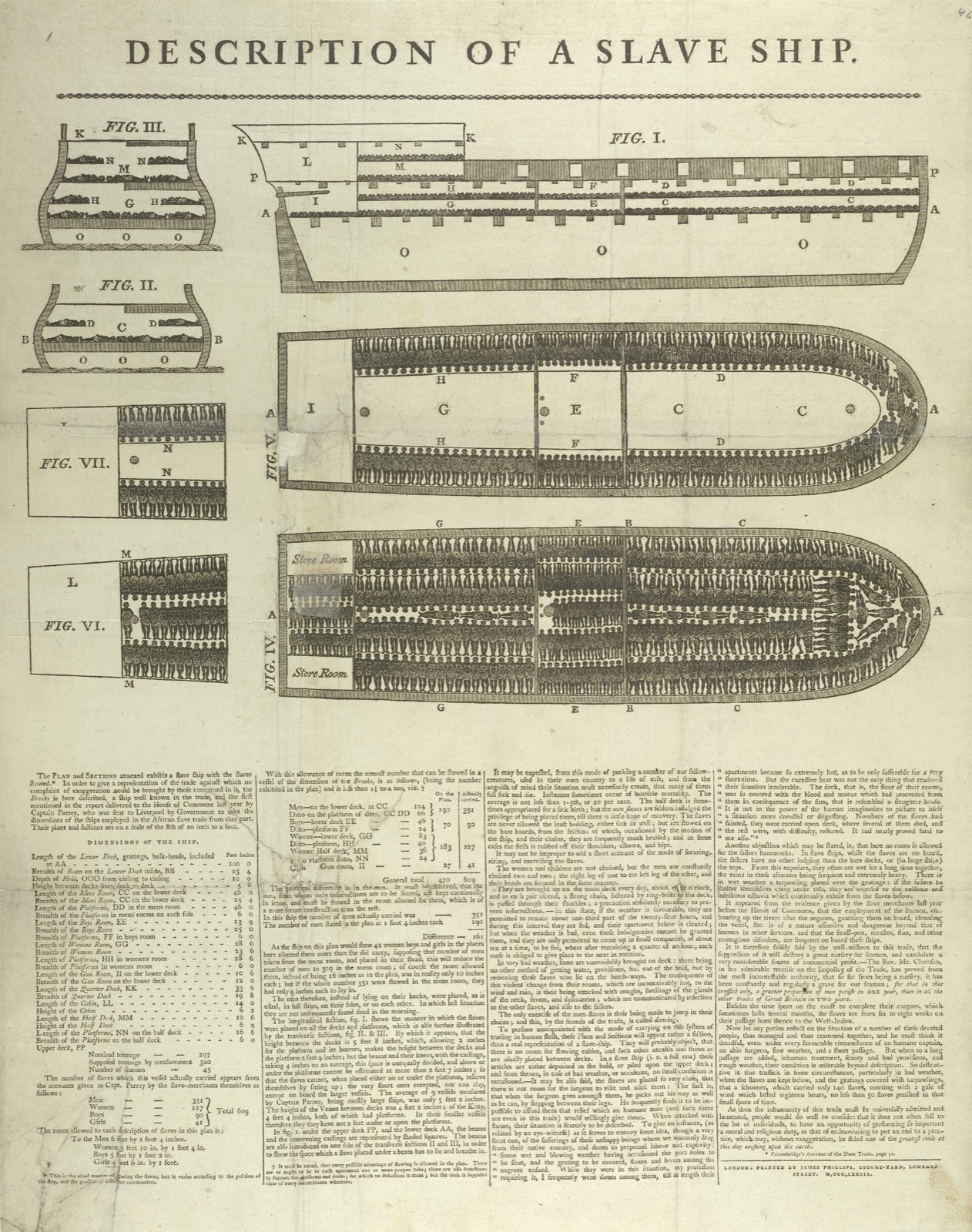
The Brookes diagram, 1788. It shows the ocean trade the 1808 law banned. It does not show the domestic trade that grew up afterward. Public domain.
On January 1, 1808, the United States banned the import of enslaved people. The internal market in human beings expanded to fill the gap.
On January 1, 1808, the United States banned the import of enslaved people. The internal market in human beings expanded to fill the gap.
The Constitution did not abolish the slave trade. It protected it. Article I, Section 9, barred Congress from prohibiting the importation of enslaved people before 1808. Twenty years was the compromise. Congress passed the ban in 1807, and it took effect on the first legal day, January 1, 1808. Bringing people in from Africa or the Caribbean as merchandise became a federal crime. Smuggling continued. The lawful ocean trade, for American ports, stopped.
The cotton gin was already in use. The Deep South was opening. Georgia, the Alabama and Mississippi black belt, Louisiana: land that paid only if someone picked the cotton. The Upper South, Virginia and Maryland especially, had enslaved populations that planters, in their own cold language, called surplus. The ban did not free a single person. It closed one source of supply and raised the value of the supply already inside the country.
The domestic slave trade moved people from the Chesapeake to the cotton frontier. Some walked in coffles. Some went by sea from the Chesapeake to New Orleans. Traders such as the firms that operated out of Richmond and Alexandria ran it as a regular business, with inventories. Families were separated because the unit of sale was the person who brought the best price, not the household. This is not a poetic way of putting it. Sale notices and traders’ letters are the source, and they are specific.
Historians have estimated the scale in the hundreds of thousands of forced migrations across the decades before 1860. The estimates differ. Walter Johnson, Steven Deyle, and others have shown that this was not a side market. It was one of the largest industries in the country. Slave traders had credit, insurance, and correspondence. They were integrated into the same commercial world as cotton factors. The ban on imports did not shrink that world. It nationalized it.
Volume 0 of this edition runs to 1776. The year 1808 is past that line, and it belongs here anyway, because it is what the colonial labor system became once the United States could write its own trade law. The founders banned the ocean trade and kept the Constitution’s protection of slavery itself. The market they left in place was American from end to end: American sellers, American buyers, American roads, American ships. The crime did not need an import stamp anymore.
Sources · U.S. Constitution, Article I, Section 9; the Act of March 2, 1807; Walter Johnson, Soul by Soul: Life Inside the Antebellum Slave Market (1999); Steven Deyle, Carry Me Back: The Domestic Slave Trade in American Life (2005).